cake live stream video chat
- 3.3
- Rating
- 1.00M
- Installs
- Free
- Price

 Analysis by App-foxy
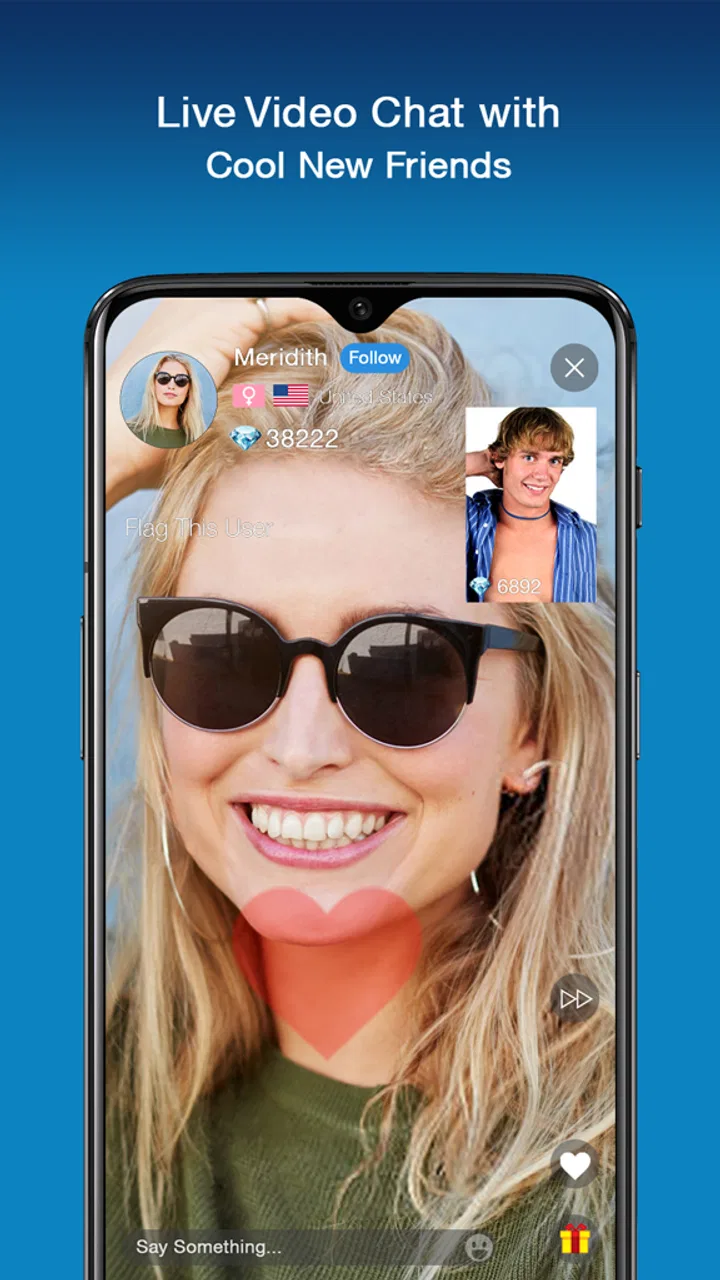
I approached cake live stream video chat as a social app for people who want conversation to feel more immediate than a normal text thread. Its basic appeal is easy to understand: instead of waiting for a carefully written message, you can enter a live environment, watch people interact, and take part in video conversations with users from different places. That makes it interesting for anyone who finds ordinary social feeds too passive or too slow.
My experience was mixed in a useful way. The app can make meeting strangers feel spontaneous, but that same spontaneity changes how much attention it demands. A live room does not wait politely while you finish your work, and a video chat can become awkward faster than a text exchange. I found that it works best when I treated it as a short social activity rather than something to leave running in the background all day.
It is a free social app from Net Tangerine, with a mature seventeen-plus age rating. The audience is clearly not intended to be children, and I would take that age guidance seriously before installing it on a shared family device. The app has passed the one-million-install mark and holds an average rating of 3.3 from roughly eighteen thousand ratings, so its reach is substantial while user satisfaction appears fairly divided.
You May Also Like

 Blood Strike: 2.5 Anniversary
Blood Strike’s Loadouts Turn Every Drop Into a Tactical Gamble
A close look at Blood Strike’s custom loadouts: how fast access to signature weapons reshapes its battle royale rhythm, rewards preparation, and narrows the gap between fights.

 Pandora - Music & Podcasts
Pandora’s Music Is Easy to Start, but Harder to Recover
Pandora’s strength is its low-effort path from a seed to a station. Its weak spot is how much confidence it asks you to place in connection, setup, and quiet recovery.

 8 Ball Pool
 Is Built on Rivalries, Rematches, and Routine
A close look at the rivalries, rematches, shared routines, and unanswered safety questions that turn a quick pool match into a persistent mobile community.

 Samsung Music
’s Quiet Strength Is Playing What You Already Own
Its reach comes less from spectacle than from dependable access to a personal library. That simplicity is both the app’s strongest retention engine and its ceiling.

 AccuWeather: Weather Radar
AccuWeather Review: A Quick, Clear Forecast for Everyday Decisions
For everyday plans, the best forecast is the one you can understand quickly. AccuWeather makes rain timing, radar, and local conditions easy to act on, with a few trade-offs.

 Hill Climb Racing
Why Hill Climb Racing Still Turns Crashes Into One More Run
A tiny car, a bumpy hill and one more upgrade: Hill Climb Racing keeps resurfacing because its simple chaos makes every near-miss feel personal.
More From Our News Desk



Why live video changes the way I communicate
Text-based social apps give me time to edit my tone. I can answer later, remove a sentence, or decide that I do not want to continue. Live video removes much of that distance. That is the main reason to try this app, but it is also the first thing to understand before using it. The communication is more human when it works, yet it asks for quicker decisions and more attention.
For someone who feels isolated while working or studying alone, a live conversation can offer a stronger sense of presence than scrolling through posts. I can hear a voice, notice pauses, and respond to a person rather than an account. International conversations also feel less abstract when they happen in real time. Even a brief exchange can make another country or culture feel more familiar.
On the other hand, this is not the best choice for every kind of social contact. If I need a clear record of plans, a quiet discussion, or a message that can be answered later, a conventional messenger is more practical. If I want polished, edited entertainment, a video platform with recorded content is likely a better fit. cake live stream video chat is strongest in the space between those options: informal, live, and unpredictable.
The app’s free entry point lowers the barrier to trying it. That matters because live social services are difficult to judge from a description alone. I can explore the general atmosphere before deciding whether it deserves regular attention. There are also in-app purchases ranging from ninety-nine cents to nearly two hundred dollars per item, so I would not treat the free download as a guarantee that every part of the experience remains cost-free.
Conversation feels more immediate, but less controlled
The central rhythm is discovery followed by quick participation. I may enter a live stream, watch for a moment, and decide whether the person or room seems welcoming. That is different from a traditional friend list, where I already know who I am contacting. Here, the first few seconds carry more weight: tone, energy, language, and the way people respond to newcomers all influence whether I stay.
I recommend observing before speaking. That small habit makes the experience less uncomfortable and helps me understand the room’s pace. Some conversations move quickly, while others leave more space for a newcomer. Joining immediately can work when the atmosphere is open, but waiting briefly gives me a better chance of choosing a conversation that matches my mood.
Video also improves clarity in some situations. A friendly expression or a hesitant pause can communicate more than a short message. When people are discussing ordinary interests, that extra context can reduce misunderstandings. At the same time, visual cues are not always easy to read across languages or cultures. I found that asking a simple follow-up question is safer than assuming I understood someone’s intention.
For users hoping to make international friends, the live format creates a useful opportunity to practice natural conversation. It is less formal than a language lesson and more interactive than watching clips. However, it is not a structured learning tool. There may be no shared topic, no correction, and no guarantee that another person wants to teach. I would use it for confidence and exposure, not as a replacement for organized study.
A practical routine for using it without losing the evening
A realistic use case is a short break after work. I might open the app for fifteen or twenty minutes, look through live activity, join one conversation, and leave once the exchange starts repeating itself. That keeps the app enjoyable because I am choosing a social window rather than surrendering the whole evening to an endless stream.
Another useful routine is to decide my purpose before opening it. If I want a quick conversation, I should avoid entering with the expectation of finding a lasting friendship immediately. If I am curious about people from a particular region, I can pay attention to language and time-zone differences instead of jumping between rooms without a plan. This simple intention makes the experience feel less scattered.
I also found that live conversation benefits from a graceful exit. A short statement such as “I need to go, but it was nice talking” is clearer than disappearing while the other person is speaking. That may sound minor, but live communication creates social expectations that scrolling does not. Leaving cleanly protects my time and avoids making the interaction feel more personal than it really is.
When a conversation is useful, I would note the person’s name or the topic before leaving, if the app’s available options make that possible. Relying on memory after moving through several live rooms is unreliable. The important point is to avoid turning every interesting exchange into a demand for constant availability. A good conversation can remain a good conversation even when it ends there.
The attention cost is higher than the download suggests
Live video is demanding because it combines watching, listening, reading, and deciding. Even when I am not speaking, I am processing what is happening and considering whether to respond. That makes the app more absorbing than a passive feed. It can be refreshing for a short period, but tiring when used while I am trying to concentrate on something else.
I would not keep a live room open during work, driving, studying, or any task that needs reliable focus. The problem is not only distraction. A sudden request to speak or a fast-moving conversation can pull my attention away at exactly the wrong moment. The better habit is to give the app a defined place in the day, with notifications or interruptions handled according to my own comfort.
There is also a difference between social energy and screen time. I may feel connected after a conversation, yet still feel mentally tired because I have been performing attention continuously. This is especially relevant for people who are shy, easily overstimulated, or uncomfortable being visible on camera. The app can help someone practice social confidence, but it can also make a quiet person feel pressured if they stay too long.
My most effective approach was to use short sessions and leave after a positive interaction rather than waiting for the experience to become dull. Ending on a good moment helps preserve the sense that the app is a choice. It also reduces the temptation to keep searching for a more exciting room, which can turn social discovery into aimless scrolling.
Compared with text messaging, the app offers more emotional detail but less flexibility. Compared with large video platforms, it feels more personal but usually less predictable. Compared with voice-only communities, video adds visual connection while also increasing self-consciousness. Those trade-offs are not flaws by themselves; they simply determine which users will feel comfortable with the format.
Boundaries matter more when strangers can see and hear me
I would set boundaries before starting, not after an uncomfortable interaction. That means deciding whether I want to show my face, how long I am willing to talk, and what subjects I will avoid. A live social app is easier to enjoy when I have already chosen my limits instead of making every decision under pressure.
I would also avoid sharing identifying details during an early conversation. That includes a full address, workplace specifics, school information, travel plans, financial details, and anything that makes it easy to connect my online presence with my offline routine. Friendly conversation does not automatically create trust, and a warm tone is not proof that someone has good intentions.
The mature seventeen-plus rating is an important reminder that this environment requires judgment. Parents should not assume that a social video app is suitable for younger users simply because the download is free. Adults should also remember that age labels do not remove the need for personal caution. I would leave a conversation immediately if someone ignored a clear boundary, pushed for private information, or made the interaction feel unsafe.
Camera comfort is another boundary people often overlook. I do not need to appear on video every time I use a social service, and I should not feel obligated to match another person’s level of openness. If the conversation only works when I reveal more than I want to reveal, it is not the right conversation for me. Protecting privacy is more important than avoiding a moment of awkwardness.
Money deserves its own pause. Because optional purchases can range from very small amounts to items close to two hundred dollars, I would never spend during an emotionally intense interaction. A live exchange can create excitement, urgency, or a feeling that I need to support someone immediately. Waiting before buying gives me time to decide whether the purchase has genuine value for me rather than being a reaction to the moment.
I would also be careful about treating repeated contact as a commitment. A person may be entertaining in a public live setting but unsuitable for private friendship. Keeping early interactions within the app’s ordinary social context, moving slowly, and respecting my own hesitation are sensible ways to preserve control. The best social experience is one in which I can leave without feeling guilty.
What the version and audience mean in daily use
The current version is 3.6.4, and the app requires Android 8.0 or later. That makes the operating-system requirement relevant for anyone using an older phone or maintaining an older spare device. Live video is already more demanding than text, so even a compatible phone may feel less comfortable if its battery, camera, microphone, or connection is not in good condition.
I would test the app in a quiet place before judging the conversations themselves. Poor lighting, background noise, or an unstable connection can make a normal exchange feel awkward. A simple setup helps: face a light source, use headphones if the surroundings are noisy, and keep the phone steady. These are not hidden features, but they make a noticeable difference in how clearly I come across.
The large install base tells me that the app has enough reach to support the idea of meeting people from different places. It does not guarantee that every session will feel equally active or that I will immediately find people who share my interests. Live communities change by time and audience, so I would judge it over several short visits rather than one quiet moment.
The average rating of 3.3, based on around eighteen thousand ratings, suggests that expectations should remain realistic. I would not install it expecting a perfectly moderated, consistently engaging experience. Instead, I would see whether its particular live atmosphere suits me. A middling rating is not a reason to reject it automatically, but it is a reason to pay attention to friction, spending, and the quality of interactions during the first few sessions.
Who should try it, and who should choose something else
I think it is a good match for someone who wants spontaneous social contact and does not mind that conversations may be brief or uneven. It can suit people who enjoy meeting strangers, practicing casual conversation, or adding a human voice to an otherwise solitary day. It is also more appealing to users who prefer live interaction over carefully edited profiles and long written posts.
I would be more cautious recommending it to someone who wants dependable friendships, private group coordination, or a calm communication tool. A messaging app is better for making plans. A moderated community built around a specific hobby is better for finding people with a shared interest. A recorded video service is better when I want entertainment that does not require me to participate.
People who dislike being seen on camera may find the format tiring even if they enjoy social discovery. The same applies to anyone with limited data, a weak connection, or little spare attention. Live video rewards presence, and that can make it a poor fit for someone who wants to dip in and out silently. I would also skip it if I were likely to make impulsive in-app purchases or feel responsible for entertaining strangers.
For a first session, I would keep expectations modest: explore the live environment, observe how people communicate, try one short interaction, and leave if the atmosphere does not feel right. I would not share personal contact details, buy anything during the first visit, or judge my social ability by one awkward exchange. That approach gives the app a fair test without handing it too much control over my time or confidence.
My social verdict after adjusting the pace
cake live stream video chat is most valuable when I use it deliberately. Its live format can make communication warmer and more immediate than text, especially when I want to meet people beyond my usual circle. The international angle adds curiosity, and the free download makes experimentation easy. I can see why it has attracted more than one million installs despite its uneven overall rating.
Still, immediacy comes with a price: more attention, faster emotional reactions, and fewer chances to edit what I say. The app is not something I would leave open all day, and I would not confuse a lively conversation with a trusted relationship. Its mature age rating, optional purchases, and unpredictable social setting all call for clear boundaries.
My recommendation is conditional but positive. Try it if you want live, informal contact and are comfortable deciding when to participate and when to leave. Use short sessions, protect identifying information, and pause before spending. If your priority is organized communication, deep privacy, focused communities, or low-pressure messaging, another social tool will serve you better.
In the end, the app changes communication less through any single feature than through its rhythm. It asks me to be present now, respond clearly, and accept that not every interaction needs to become a lasting connection. When I keep that perspective, it can be an enjoyable way to break up a lonely afternoon. When I forget it, the same live energy can become distracting, demanding, and harder to control than I intended.
FAQs for cake live stream video chat
01What is Cake Live Stream Video Chat, and how does it work?
Cake Live Stream Video Chat is a social entertainment app centered on live video broadcasts and real-time interaction. After creating an account, you can browse available live streams, watch creators, send comments, and in some cases join conversations or participate in interactive activities. The experience depends heavily on the creators online at the moment, so the quality and variety of streams may change throughout the day.
02Is Cake Live Stream Video Chat free to download and use?
The app can generally be downloaded without an upfront fee, and users may be able to watch selected live streams and interact using basic features at no cost. However, live-streaming platforms commonly include optional purchases, virtual gifts, coins, subscriptions, or premium functions. Before spending money, check the current pricing, payment terms, and whether recurring subscriptions are enabled through Google Play or the App Store.
03Is Cake Live Stream Video Chat safe for children and teenagers?
Parents should review the app carefully before allowing children or teenagers to use it. Live video and public chat can expose users to mature conversations, inappropriate content, unwanted messages, or contact from strangers. Use the available privacy, blocking, and reporting tools, avoid sharing personal information, and check the platform’s age rating and community guidelines. Younger users should be supervised.
04Can I protect my privacy while using Cake Live Stream Video Chat?
You can improve your privacy by using a username instead of your real name, limiting profile details, and avoiding the publication of your location, school, workplace, phone number, or other identifying information. Review the permissions requested by the app and disable access that is not necessary. Remember that live broadcasts, comments, screenshots, and recordings may be saved or shared by other users.
05What should I do if I encounter inappropriate content, harassment, or a suspicious account?
If a stream, message, or user makes you uncomfortable, leave the conversation and use the in-app blocking and reporting functions whenever available. Do not send money, passwords, identification documents, or private photos to strangers. Keep evidence such as usernames or screenshots if it is safe to do so, and contact the platform’s support team. For threats, fraud, or immediate danger, contact the appropriate local authorities.
Pros
- Meet people through spontaneous live video conversations.
- Simple interface makes starting or joining streams easy.
- Interactive chats help create a lively social experience.
- Discover streamers and content from different interests.
- Available for casual entertainment whenever you have free time.
Cons
- Video chats can consume significant mobile data and battery.
- Public interactions may include inappropriate or unwanted content.
- Some features or interactions may require in-app purchases.
- The quality of conversations depends heavily on available streamers.
- Privacy settings should be checked carefully before sharing personal details.

cake live stream video chat
Gallery